
home page

Leadership Presence:
The calm in the eye of the storm
The calm in the eye of the storm
by
Carla Kimball
©2008, Carla Kimball
All rights reserved.
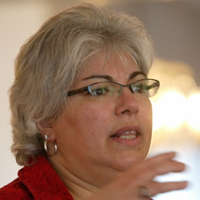 Leadership
presence may sometime seem very intangible or elusive as a concept. But
when I was having lunch with my friend and colleague LeAnne Grillo the
other day, and asked her what it means to her, her clarity was inspiring
and her message very concrete and immediate.
Leadership
presence may sometime seem very intangible or elusive as a concept. But
when I was having lunch with my friend and colleague LeAnne Grillo the
other day, and asked her what it means to her, her clarity was inspiring
and her message very concrete and immediate.
LeAnne, is a Partner in Generon Reos, which is part of Reos Partners, an international confederation of consulting organizations dedicated to supporting and building capacity for innovation in complex social systems.
In answer to my question, LeAnne said: “Leadership presence is the ability to stay quiet and centered in the midst of chaotic events swirling around us.” LeAnne further elaborated on this idea by saying that a leader with presence is able to stay in touch with her core, becoming “a rock of stillness in the midst of swirling water.”
With presence, the leader is able to see through the turbulence for emerging possibilities and provide the necessary direction for her team. A leader with presence has the resiliency and discipline to respond in a balanced and thoughtful way when something critical comes up and with that can inspire confidence in everyone involved in the issue.
According to LeAnne, the key to this presence is the ability to consciously slow down internally. This doesn’t necessarily mean speaking or acting slowly, but rather that the internal backdrop of the leader is quiet and still so that he can be fully open to the situation and call upon all his wisdom and knowledge as well as tap into the same from those around him.
Why is this so important? LeAnne answered by saying that with presence a leader doesn’t simply react to the prevailing winds at the event level. Instead, “she is able to look beyond the events to the underlying structures and actually be generative. Because she is operating from a still and open place, she can draw on more internal and external resources and is able to set aside her ego to listen to others. Leaders who have developed this sort of presence often have the capacity, then, to deal much more effectively with high degrees of complexity.
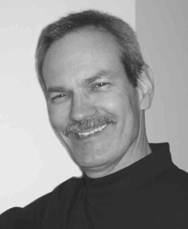 LeAnne’s
thoughts on the importance of presence reminded me of a comment made by
Michael McCormack, former director of the Massachusetts Institute of Community
Health Leadership, in a previous article written for my Successful Speaker
series. Michael said, “If you’re asking people to create change,
there’s a space where, if it’s going to work, it appears out
of control, on the edge of chaos…People who have presence can be
in that place of ambiguity because they don’t panic. They must ‘hold
the space’ so that the group can move forward.”
LeAnne’s
thoughts on the importance of presence reminded me of a comment made by
Michael McCormack, former director of the Massachusetts Institute of Community
Health Leadership, in a previous article written for my Successful Speaker
series. Michael said, “If you’re asking people to create change,
there’s a space where, if it’s going to work, it appears out
of control, on the edge of chaos…People who have presence can be
in that place of ambiguity because they don’t panic. They must ‘hold
the space’ so that the group can move forward.”
At no time in recent history has this ability to stay calm in the center of the chaotic storm of political and financial crises been more imperative. As I listen and watch the reporters, politicians and experts speak on TV and radio, I hear their own personal panic coming through their words and my sense is that this does not serve the higher good.
We need leaders to speak from the stillness and wisdom of their core, to be able to step back from their egos and their personal concerns and see the larger picture. By doing so, despite the uncertainty and unprecedented nature of the crises that confront us, they can convey a sense of confidence and clarity. We need leaders who can listen to themselves and others and then speak from the collective rather than from their individual egos.
Leadership presence is not only essential at the highest levels of government, but also in any situation where important decisions are being made. As we all contemplate the multiple crises that confront us in our world today, the stillness of leadership presence as described by both LeAnne and Michael, seems an absolutely essential quality that we all need to develop.
*******
LeAnne’s projects at Generon Reos include several multi-stakeholder Change Labs including the Sustainable Food Lab which is aimed at creating living examples of mainstream sustainable food supply chains; and the 3E—Economy, Energy, and Environment—Initiative, which seeks to improve the quality and effectiveness of public and private action in transitioning Canada to a high-efficiency, low-carbon economy. To learn more about LeAnne and the work of Generon Reos, visit their website at http://www.reospartners.com/.
You might also like to read my previous article about Michael McCormack and the work he was doing with community health leaders.
*******
Carla Kimball, M.A., M.B.A. is a speaking presence coach, workshop facilitator and president of RiverWays Enterprises. Over the past 18 years she has presented and coached on a diverse set of business, stress management and communication topics to thousands of business and service professionals. Client companies include leading financial management, health care, and accounting firms.
Carla offers a selection of regular public speaking presence and presentation skills programs and coaching services for individuals as well as for corporate groups. Carla works from inside-out and helps people become more confident speakers while establishing a strong relationship with their audience.
Carla is a prolific writer on public speaking topics and currently offers a 26 week subscription to The ABCs of Presence in Speaking, Leading, and Life!, a newsletter which presents one article and exercise a week organized alphabetically with a unique perspective on public speaking issues. She has also distilled her approach to public speaking presence into a workbook/audio set entitled the SpeakingPresencesm Toolkit.
Carla is based in the Upper Valley region of Vermont and New Hampshire at the intersection of Interstates 91 and 89 and centrally located to all of New England, including Boston, Western Massachusetts, Connecticut and Maine.
(Please contact us for permission to reprint this article. )
[home] [programs] [keynotes] [resources] [about
us]
We are centrally located in the Upper Valley region of Vermont and New Hampshire close to the intersection of Interstates 89 and 91. As such we are in in the heart of New England and close to Boston and all of Massachusetts, Vermont, Connecticut, New York and Maine.
Travel time from:
Albany, NY — 2.75 hours
Boston, MA — 2.25 hours
Brattleboro, VT— 1.25 hours
Burlington, VT — 1.5 hours
Concord, NH — 1 hour
Hartford, CT — 2.5 hours
Portland, ME — 3 hours
Portsmouth, NH — 2 hours
